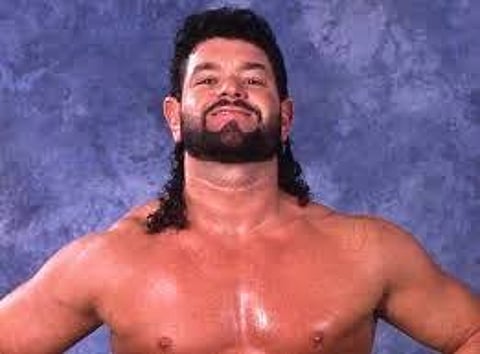
File pic of Barry Horowitz | Wikimedia

Sportshadow got the opportunity to interact with one of the most technically gifted wrestlers in the 80s and 90s, Barry Horowitz, in the tenth episode of its Wrestleshadow podcast series.
Mr. Technical offered his opinions on a myriad of topics like his scary India Tour experience, locker room dynamics and bullying in the 90s, involvement of celebrities like Jelly Roll, Bad Bunny, Logan Paul, and Pat McAfee.
Horowitz also shared his insights on working with the likes of Vince McMahon Sr and Eric Bischoff and never took it in his ego to put over other stars.
He deeply misses his friend Owen Hart and argued that technical wrestlers like Owen did not need to perform dangerous stunts from the ceiling, which he sees as a ploy for wrestlers who can't work.
Here are the edited excerpts of the interview.
I wrestled in India for an independent promoter. It was very different from working with a billion-dollar company, especially regarding accommodations, transportation, safety, and security. I wasn't sure if they would follow through with the finances, but they did.
I think I was there for a few weeks. The travel involved bumpy roads, like something you'd see in the movie Jewel of the Nile, with nothing but cacti and sunshine around. I remember a driver telling me not to use a certain building for a restroom because people might be worshiping cows inside, which is part of their culture.
I was younger then. The riot that happened in India between wrestlers like Conan Chris Walker and one of the Demolitions was widely reported in the wrestling world and on shows like Entertainment Tonight and Inside Edition in America.
It escalated because people back then took pro wrestling more seriously than they do now with "sports entertainment." It was a scary time being in an unfamiliar country. However, WWE and other large companies have since returned to India. Now, with "sports entertainment" embraced by fans, the transition has more power.
Vader was one of the biggest bullies in the locker room. I never witnessed him bullying anyone or saw anything personally. I was in the ring with him once in a handicap match with two other wrestlers, and I handled it properly because I knew what to expect.
Other wrestlers weren't as prepared. I heard many stories about his demeanor and how he would alternately talk down to people and promote them. Every bully eventually meets their match, and he met his with Paul Orndorff, Mr. Wonderful.
This happened at a TV taping, and the bully was stopped in his tracks. There's always someone better at the top of the mountain, whether it's Mike Tyson, Joe Lewis, or UFC fighters. Somebody will always come along to knock you off the mountain, so be careful who you bully.
I haven't really faced bullying myself. There's a difference between genuine bullying and joking around or being aggressive in the ring. Sometimes you let things go. If someone was in my face in the locker room, I wouldn't be bullied. I didn't participate in the silly, immature locker room jokes.
They usually happen when you're in the ring, so they aren't done directly in front of you. I wasn't going to lose my job, contract, dream, or career over something so silly.
I've survived the 90s and am still in the wrestling business. That doesn't make me a coward. It makes me smart. If someone challenged me in the locker room in front of other wrestlers and physically touched me, I would have to be careful. It depends on the pecking order. They might fire me and not the other guy.
Regarding steroids in the WWF locker room back in the day, I never witnessed it personally. I can usually tell when someone is on something, especially now, but it was harder to know back then.
I approached my career differently. I arrived at the venue early to stretch, warm up, and go over my match. I wasn't there to socialize. I heard things but didn't pay attention. I never failed a drug test, and it wasn't my business. I was never approached about it, and if I had been, I would have dismissed it.
My views on celebrities and influencers like Logan Paul, Bad Bunny, and Jelly Roll joining WWE are mixed. Pat McAfee is an athlete, an NFL kicker who played with Peyton Manning. I consider him unbelievable.
While training is involved, I'm not a fan of bringing in just any movie star because it implies anyone can be a pro wrestler. Logan Paul's work, while not perfect, is good.
Bad Bunny, a hip-hop artist from Puerto Rico, is incredible. Jelly Roll has lost weight, and his work looks solid.
They're not going to be like me, Paul Orndorff, Bob Backlund, or Rick Martel, because they do this part-time. I've been wrestling professionally since I was 21, and amateur since I was 14 or 15. The difference is that I have a passion for it.
It's a delicate situation when these celebrities get the spotlight at WrestleMania. You have talented wrestlers in the company who are excellent in the ring.
A movie star may be decent, but they draw in new audiences who saw them in a movie with The Rock or Tom Cruise. At the same time, true wrestling fans want to see matches like Drew McIntyre against Chad Gable or Seth Rollins against Roman Reigns. They appreciate the entertainment but don't want it to dominate.
Regarding the pecking order backstage, I worked for Vince McMahon Sr. He was quiet and very busy. I was only 21 years old, so I felt apprehensive and nervous. However, I knew I had to show him I had moxie.
After wrestling TV matches for about a year or two, I told him I needed to progress. He attempted to get me into the Portland, Oregon territory, but when that talent pool filled up, he called Crockett Promotions in Charlotte, North Carolina. I stayed there for two years and became polished.
My mentor, Boris Malenko, taught me the foundation of my house. When you build a house, the foundation is the basement, but you must eventually move to the bedrooms, the bathroom, and the attic.
That is where you get polished. I learned by traveling the road and listening to legends like Rufus R. Jones, Jimmy Valiant, Roddy Piper, Ric Flair, Bob Orton Jr., and Don Muraco.
In my book, I thanked 65 people. Whether it was one word or a long lesson, if they helped my career or helped me become a better person, they earned a thank you. Conversely, I did not mention those who gave me the wrong advice. If I had listened to them, I would have been out of the business.
As for Eric Bischoff, I have no comment. He authorized my WCW contract, but when I thanked him at a TV taping in Florida, he didn't even look at me. I dislike disrespect, especially since I have been around longer than him.
I was not a TV announcer in Minnesota and got the job handed to me by Ted Turner. He didn't earn his spot the way a pro wrestler does. I deserve respect, and I simply don't care for him.
My wrestling days are over. I have nothing left to prove. I wrestled a 35-minute hardcore match against Joey Janela for All Jersey Pro Wrestling recently, but I am not a hardcore wrestler. I am a technical professional wrestler. That is my forte. I also had a short match with Johnny Swinger on Impact and did a heel promo for AEW.
I might mentor someone, walk a talent to the ring, or cut a promo, but I won't return to full-time action. I trained for 18 months before I started. Anyone who tells you they can learn this business in a couple of months is wrong. I trained three days a week with the Malenkos and Carl Gotch while working a grueling job in a mattress factory.
Regarding MJF, I met him once or twice. For his age, he is a sound wrestler in great shape, and his promos are phenomenal. Being fellow members of "the tribe" (Jewish), I wish him luck.
I was disappointed with my interaction with Tony Khan. I saw him in a hallway talking to Orange Cassidy, and though I was only 50 feet away, he did not acknowledge me.
When I feel someone is being disrespectful through their body language or attitude, I don't engage. I know who I am. Some people have been in this business for two minutes and act like they own it.
Does AEW have a shot at going head-to-head with WWE? Never say never, but if you put them side-by-side, there is a massive difference. WWE has the best cameramen, props, and production, and they pack every building. It is hard to keep up with that giant.
However, AEW has excellent workers. I am impressed by their wrestling ability and psychology. I also appreciate that they allow competitive 12-minute matches rather than the squashes you often see elsewhere.
My final goal is to be a coach. Many coaches in these billion-dollar companies don't know a "wristlock from a wristwatch." They come from the indies or Ring of Honor but lack true psychology.
You don't want too many cooks in the kitchen, but you need coaches who can refine promos and ring work. If these companies don't utilize my knowledge to help young talent, it is their loss. If someone is burying my reputation, it’s only because they are jealous and can't lace my boots.
I am aware of the Performance Center in Orlando, Florida, though I don’t know every instructor there. I know Shawn Michaels and The Undertaker have been involved recently, along with others. I started with Vince at age 21 and spent 70% of my career with that company, with the remaining 30% in WCW.
I live only 45 minutes from the Performance Center. Why hasn't there been a phone call? Why hasn't Barry Horowitz received an interview or a tryout? I don't believe I even need a tryout; I am currently sitting on the couch while they miss the boat on what I offer.
They bring in "superstars" once a week, pay them handsomely, and cover all their travel and accommodations, yet some of these people have never truly wrestled. They might have spent two years in ECW jumping off ladders or worked in All Star Wrestling, but they lack the foundation.
It isn't a matter of "heat". I am the opposite of the problematic people they hire. Corporate entities often use the excuse that they "just don't have room," which is a safe statement to avoid legal trouble, but I find it idiotic. My credentials speak for themselves.
I have worked full-time for major companies, been involved in major pushes, captained a Survivor Series team, and competed in King of the Ring. I was part of the massive push with Skip and wrestled on the same card in Anaheim where Shawn Michaels defended his world title against Bret Hart before WrestleMania.
It should be a simple matter of finding my phone number. I have reached out, but that building is like a locked compound. I asked three people to give my number to anyone at the Performance Center who could help, but they likely threw it away because they fear I’ll take their job.
I don't care if a coach is better, bigger, or has wrestled longer than me; I care about working there and adding value to the product. I check my ego at the door. Many of these guys lead with their egos instead of their heads, which I find immature and childish.
My ego never got in the way of losing matches because I understood my role. In a rock band, not everyone can be the lead singer. You need a drummer, a guitar player, and a saxophonist. Not everyone can be Jon Bon Jovi. If you don't like your role, you can quit and make nothing or go work at Walmart or for $50 a night on the indies.
My perseverance paid off. Other guys in my position didn't work or look like me, and they didn't get the push I did. I deserved that push, and it worked solidly for a year. People still talk about my matches with Skip and Owen Hart.
You must have someone like me to get the "superstar" over. If you don't, you won't put a** in the seats. When I put Bret or Owen Hart over, the audience thought, "Barry almost won. He can really wrestle." I want to be viewed as a technical professional and an artist. Anyone who thinks otherwise is a "mark" who doesn't understand the business.
I miss Owen Hart immensely. I knew his entire family—Stu, Bret, and all the brothers. I wrestled Owen in every gimmick he ever had, starting from the night Chief Jay Strongbow and I picked him up at the airport in Bristol, Tennessee, when he was about 25 years old.
Initially, it was a rough transition for him because he was always winning while working for his family's promotion, but he learned quickly. Our matches became supreme because he understood the business. I have immense respect for the Harts. We are cut from the same cloth.
I want to use this platform to say that the accident that killed Owen should never have happened. Technical wrestlers do not need to fly from the ceiling. Stunts like that are often used to compensate for an inability to work in the ring. While someone like Shawn Michaels can do it because he can also work, Owen did not need to be up there. I cannot believe he even agreed to it.
The way he left this world was wrong. I wouldn't come off a ceiling or get into a coffin for a million dollars, and management should respect that.
If you want someone to go off the ceiling, give that stunt to the guy with the face paint who shakes the ropes and can't actually wrestle. You know who I'm talking about. We won't even say his name because I'm not putting him over.
I have to give AEW props for honoring Owen Hart with that tournament. WWE should have done it first. It happened on their playground and not honoring him there is disrespectful. Owen was a genuinely nice guy—a great wrestler, a hilarious jokester, a dedicated family man, and a great traveler.
Regarding the branding in WWE, I actually like the logos on the ring mats and barricades. It’s entertainment, and they are simply following the trends of hockey and the NFL.
It adds color to the product. The days of a plain blue apron with a white or black canvas are gone. Seeing bright branding like Powerade, WrestleMania, or SummerSlam amps up the fans.
It makes them feel like they are watching the big leagues. However, you have to avoid overkill. You don’t want the sponsors to overwhelm the presentation.
Repetition is a major pet peeve of mine. I’ve noticed a trend, specifically in AEW over the last four years, where wrestlers in the second or third match will copy a spot from the opening match.
If I were backstage, I would correct that. You aren't being a jerk. You’re improving the product. When fans see the same move twice in one night, it becomes hilarious and boring.
On the other hand, some of these workers are phenomenal and out-wrestle the WWE talent, but they take too many risks. You can get hurt badly doing those things.
Another issue is the "weak cover." You need to hook your opponent's leg properly, not just throw an elbow in their face. If you are trying to pin or submit someone, you have to go for it with a good grip.
We also see too many kick-outs after "death-defying" moves. When someone kicks out of multiple piledrivers on the pavement or chairs to the head, it devalues the finish.
That might be acceptable for a 60-minute Iron Man match or a world title bout, but otherwise, you have to weigh the necessity of those spots.
This is an exclusive interview by Sportshadow. Media outlets using quotes are requested to provide a backlink to this article or the website's homepage alongside embedding the video interview published on Youtube.